US Department of State Announcement
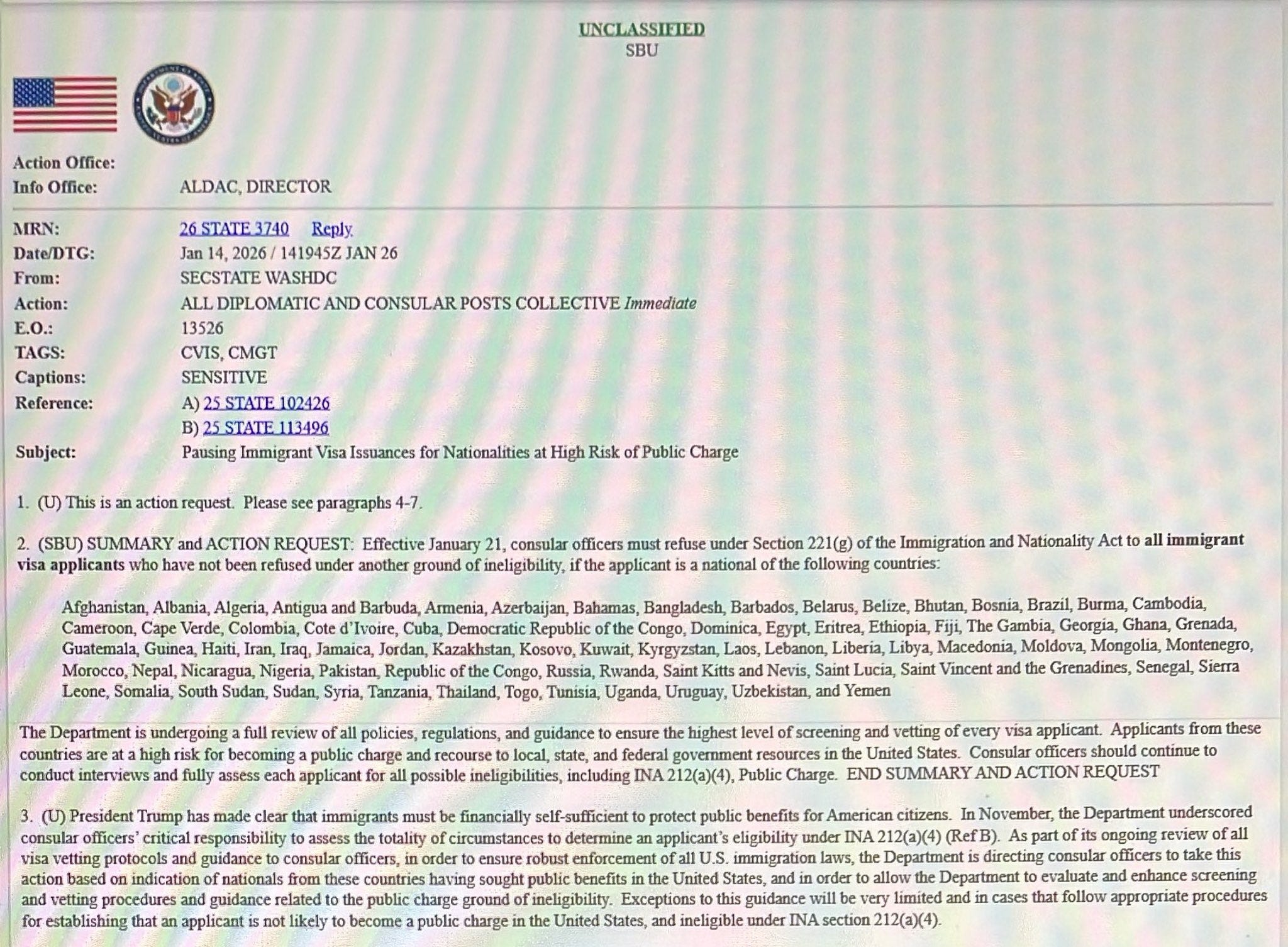
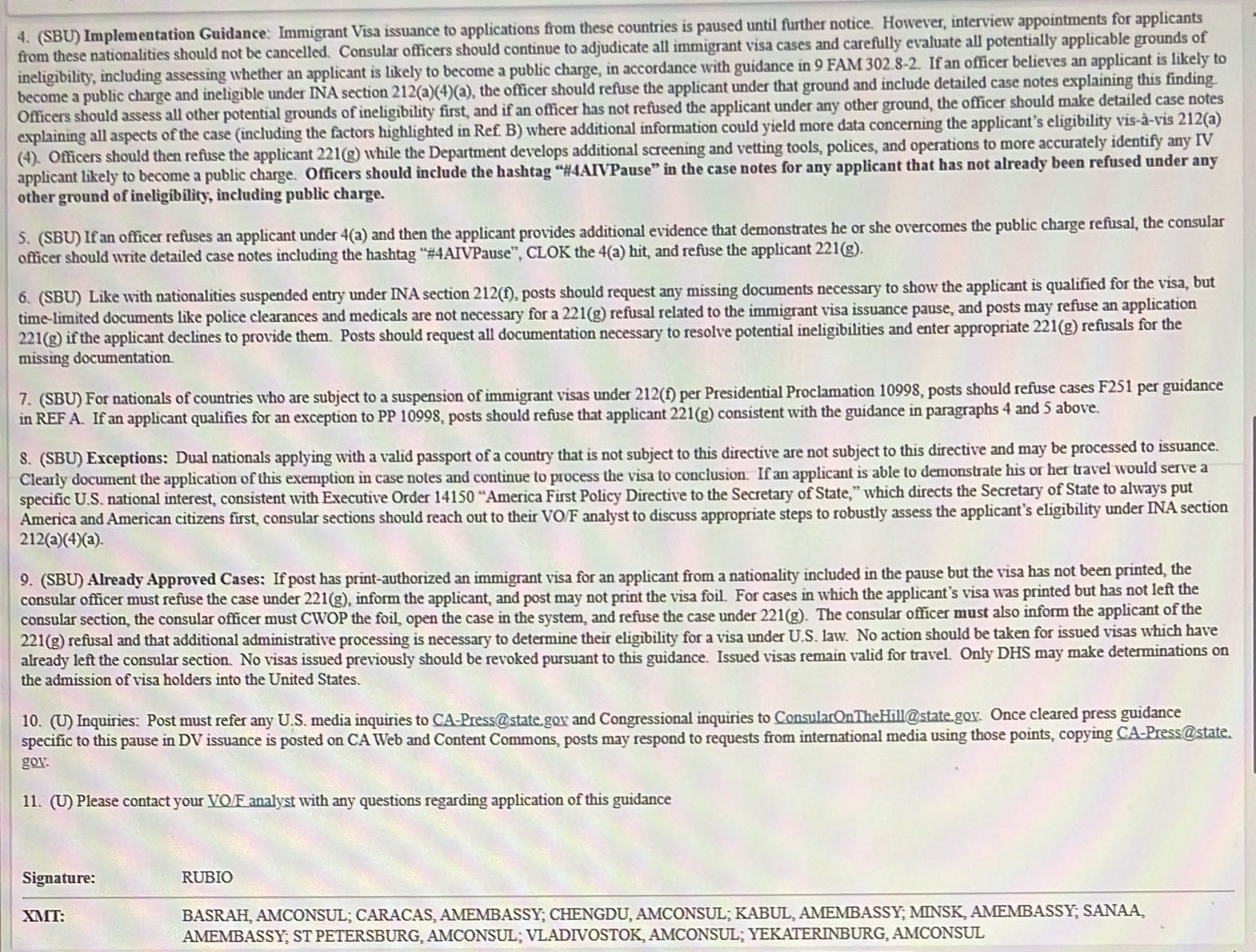
This measure is part of a policy review intended to apply more rigorous screening to assess whether applicants may, in the future, become dependent on U.S. government public assistance (public benefits).
An important point you must clearly understand is the following:
- This measure is not a permanent visa denial or ban. It is a temporary pause intended to reorganize and clarify adjudication standards.
Once the policy review is completed, visa issuance is expected to resume.
Scope of Impact
Both family-based immigration and employment-based immigration (including all EB categories) fall under immigrant visas and are therefore subject to this measure. However, petition processing by USCIS and the National Visa Center (NVC), as well as interview scheduling, will continue as normal.
Some delays may occur only at the final visa issuance stage after the interview.
Again, the immigration process itself has not been halted; only the issuance of visas is temporarily on hold.
What This Means for EB-3 Applicants
For your EB-3 employment-based green card, this is the critical context you need:
Earlier Stages Are Unaffected
Visa bans and consular processing suspensions generally do not affect the earlier stages of the EB-3 process:
- Labor Certification (PERM): Handled by the Department of Labor (DOL), not the State Department. This stage continues as normal.
- I-140 Petition: Handled by USCIS, not the State Department. This stage continues as normal.
The impact is typically limited to the final stage—consular processing abroad or adjustment of status for those already in the United States.
EB-3 is a Long-Term Process
The EB-3 process is measured in years, not months. Policy headlines change faster than the immigration process moves. Many applicants who started their journey during the 2017 travel ban, the 2019 public charge rule changes, or the COVID-era processing suspensions ultimately received their green cards after those policies were modified, narrowed, or reversed.
Important Guidance for Our Clients
This measure is not intended to restrict visas, but rather to ensure clearer and stricter application of the Public Charge standard.
If an applicant:
- Has a formal job offer from a legitimate employer,
- Is able to work lawfully in the United States, and
- Has a structure in place to pay taxes faithfully,
there is no reason for the visa to be denied during the review process.
What You Should Do Now
Our recommendation for EB-3 applicants:
- Stay the course. If you’re in the labor certification or I-140 stage, continue moving forward. These stages are handled by different agencies and remain unaffected.
- Monitor developments. Subscribe to updates only from official US government sources and reputable immigration news outlets. Ensure you also read Isaford Immigration updates. Be careful not to follow social media influencers’ advice. Policies can change quickly.
- Document everything. Keep copies of all filings, receipts, and correspondence. Having a complete record protects you if policies shift. Isaford Immigration keeps all your flies updated and your files are also available on the Isaford Immigration app.
- Don’t make reactive decisions. Fear-based decisions often lead to worse outcomes. Consult with Isaford Immigration before making any changes to your plans.
- Continue building your case. The stronger your application, the better positioned you’ll be when processing resumes or if exceptions are made. Isaford Immigration remains committed to the success of your case.
Looking Ahead
Immigration policy is political and subject to change. What matters for EB-3 applicants is understanding that employment-based immigration has historically remained more stable than family-based or humanitarian categories during periods of policy uncertainty.
The EB-3 category exists because American employers need workers. That fundamental economic reality doesn’t change with political announcements. Your sponsored position represents real workforce needs that the U.S. economy relies on.
Isaford Immigration will continue monitoring this situation and providing updates as more information becomes available.
In fact, this measure reinforces that employment-based immigration—where the applicant genuinely works and pays taxes—remains one of the most clear and secure paths to obtaining a visa.